


JOINT REPLACEMENT SURGERY
KNEE REPLACEMENT
We provide a diverse range of solutions for joint replacements, incorporating minimally invasive surgeries, and outpatient procedures.
WHAT IStotal knee replacement?surgery?
This is a surgical procedure performed to treat arthritic knee. This is done by removing the damaged cartilage in the knee joint and replacing it with artificial implants.
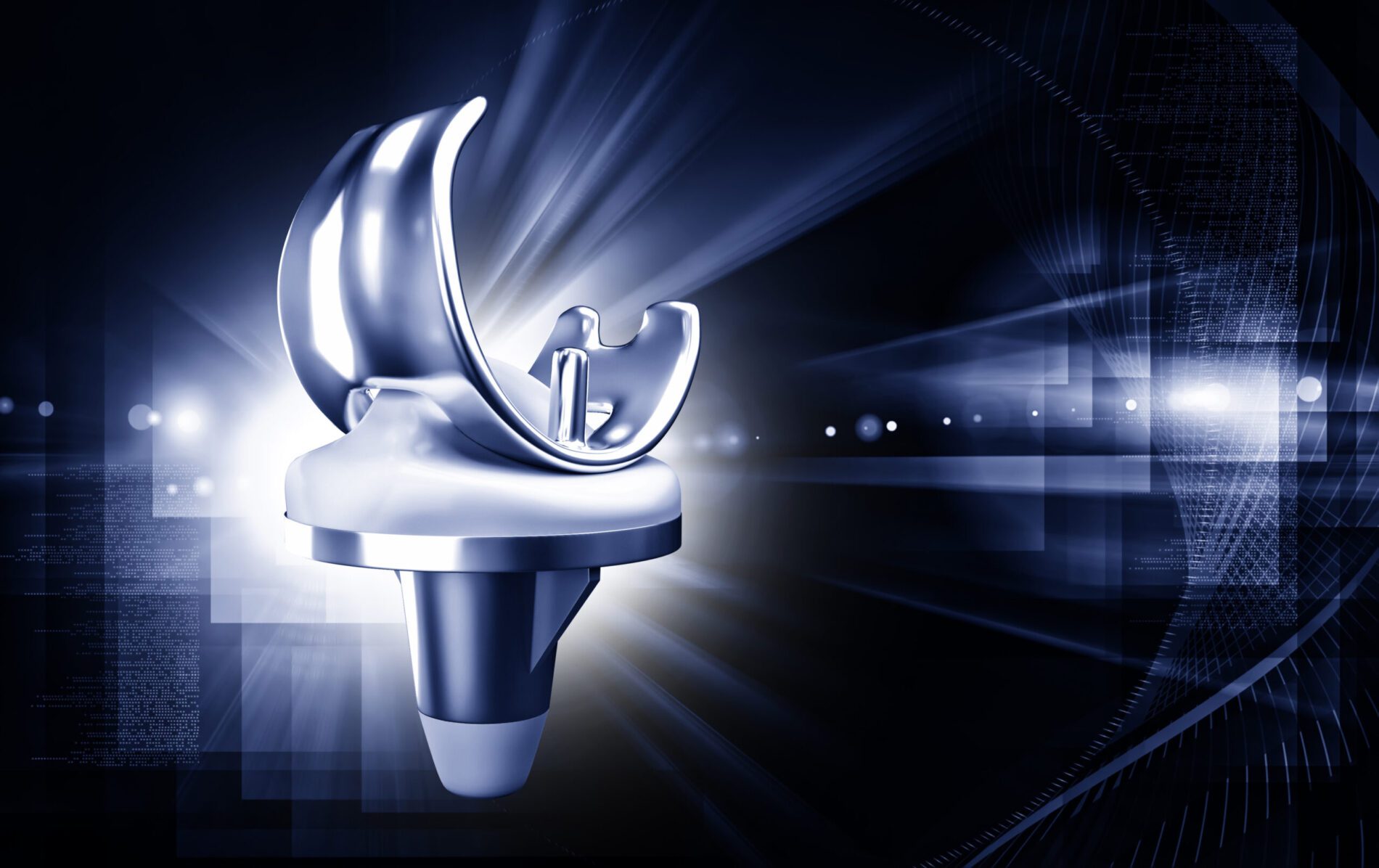
Components
Total knee replacement is composed of four components:
These components are fixed to the bone with bone cement.
01 / The femoral component
made of Cobalt-Chrome that is fitted to the end of the femur bone
02 / The tibial component
made of titanium alloy. It is fitted to the top of the tibia bone
03 / Plastic liner is placed
between both the femoral and tibial component and act as shock absorber
04 / Patella component
made of plastic and it is fitted to the back of your knee cap(patella)
What is partial knee replacement?
Uni-compartmental knee replacement This is a surgical procedure performed to treat arthritic knee. This is done by removing the damaged cartilage in the knee joint and replacing it with artificial implants.
Patellofemoral replacement Patellofemoral replacement is performed when osteoarthritis is limited to the knee cap (patella) and the front of the femur. It involves a replacement of the patella with a plastic implant and metal implant onto the femur.
What are the advantages of partial knee replacement?
Partial knee replacement offers shorter surgery, faster recovery, less pain, less restriction and less complications.
What is knee osteoarthritis?
Knee osteoarthritis is a degenerative disease typically caused by wear and tear. It is caused by a gradual cartilage destruction leading to bone rubbing on bone. These changes lead to pain, stiffness, muscle weakness and decrease hip range of motion.
Pathology and Expertise
Internationally recognized for excellence in orthopedics
Our practice provides an extensive array of comprehensive orthopedic care services.















Scroll
Pathology and Expertise
Orthopedic surgeons specializing in the knee and hip in Montreal
On this site you will find a range of information on osteoarticular and ligament pathologies frequently encountered in the lower limbs as well as possible treatments.
Send a message
Our array of joint replacement solutions
Minimally invasive surgeries and outpatient procedures.
If you wish to be advised on the most appropriate treatment, please call to schedule an appointment or click below to request an appointment online.
FAQ
Knee replacement is one of the most successful surgeries in orthopedics. It is recommended once you are not able to do your normal daily activities secondary to pain, stiffness and all non-surgical treatments have failed. Total knee replacement help relieving pain, decrease stiffness and restoring mobility therefore improving patient’s quality of life.
You should expect to be able to return to your normal activities with less pain and limitation. You will be allowed to do any of the activities you like, however we recommend to avoid high-impact exercises such as running and jumping as they may cause your knee to wear out early.
Even though total knee replacement surgery have been shown to be extremely durable and have high successful rate at 10-20 years, it still has a number of potential risks as with any operation. Your surgeon will discuss all these risks with you before surgery and answer any of your questions.
- If you are smoker; you have a higher risk of getting an infection and wound complications. Therefore, we recommend that you quit smoking at least few weeks before surgery to optimise your outcomes.
- If you are overweight; again you have higher risk of getting an infection or having other problems after surgery. Therefore, we recommend that you try to lose as much weight as you can before surgery. This can be achieved by talking to your family doctor or a dietitian.
- Stay active; keep active and exercise up to the day before surgery. This improves your strength, range of motion and endurance.
- If you are diabetic; managing your blood glucose is extremely important before surgery. It reduces the risk of problems after surgery such as infection. Make sure you talk with your family doctor or endocrinologist to make sure your blood glucose is optimised before surgery
- Medications; make sure you follow the recommendation given to you by our medical team concerning your medications before and after surgery.
- Home; make sure your home is ready for you when you return from your surgery. Some suggestions include (if needed): raised toilet seat, shower chair or bath transfer bench, handrails, chair with high/ firm seat with backrest and armrest, move any obstacles that you could trip over such as rugs, extension cords, etc.. Make sure you have someone to help you when you get home with daily needs.
Pain:
- You should expect to have some pain, swelling and bruising after surgery. Different medications and strategies will be provided to you to help managing your pain.
- Over time pain will improve and you will need les medications.
- Other strategies include; applying ice packs to your hip and elevate your leg several times each day
Swelling:
- Your leg will get swollen and bruised following surgery and will get worst in the first few weeks before it resolves.
- To help with the swelling you can ice your hip for 10-15 minutes at a time then wait 1 or 2 hours before you ice your hip again. Always wrap ice in a towel before putting it on your skin.
- You can also purchase ice machines such as cryocuff or game ready device but it is not necessary
- Also make sure to keep the leg elevated when you sitting or lying down.
Your knee will continue to recover for the next few months. In order to have a successful recovery you need to continue doing the following :
- Keep your incision clean and dry :
- You can shower after 48 hours from surgery
- You can have a bath after 6 weeks from surgery
- Do not rub anything on the incision including lotions and ointments
- Stay active and do your exercises several times each day
- Call your surgeon right away if you have any of the following concerns :
- The incision is red or draining a lot of fluid
- The incision smells bad or see green pus
- Have a fever that last more than 1 day
- Your pain is getting worst and the pain medications are not helping
- Go to the emergency department if :
- Short of breath or have difficulty breathing
- Pain, tightness or pressure in your chest
- Sudden swelling, pain or redness in your thigh or calf
You can stop using them once you feel that you are strong and steady enough to stand on your operative leg without an assistive device.
When can I stop using my walker or crutches?
You should not drive for at least 6 weeks. Also do not drive if you are taking any medicament as they might affect your driving
When can I start to drive again?
Most people return to their usual activities by 3 months.
When can I go back to sport?
Most people go back to work by 6-8 weeks.
When can I go back to work?
It is very likely that this will happen. Just let the security staff know that you had a knee replacement before walking through the detectors. You do not need a special documentation to travel.
Will my new hip set off metal detectors in the airport?
Most patients do not need any restrictions or precautions after surgery.
Is there any knee precautions after my surgery?
Walking, dancing, swimming and golf are considered to be generally safe activities after your initial recovery period. High-impact or injury-prone contact sports are usually not recommended such as running
Are there any activity restrictions with my new joint?
All prostheses have a limited life expectancy depending on the individual patient’s age, weight and activity level. There are no guarantees on how long your new joint will last, although the average can be from 15 to 20 years.