


JOINT REPLACEMENT SURGERY
HIP REPLACEMENT
We provide a diverse range of solutions for joint replacements, incorporating minimally invasive surgeries, and outpatient procedures.
WHAT IStotal hip replacement?surgery?
This is a surgical procedure performed to treat arthritic hip. This is done by removing the damaged cartilage in the hip joint and replacing it with artificial implants.
Book an appointment
Send us a message.
We’re here to answer any question you may have.
— Our specialist will contact you shortly.
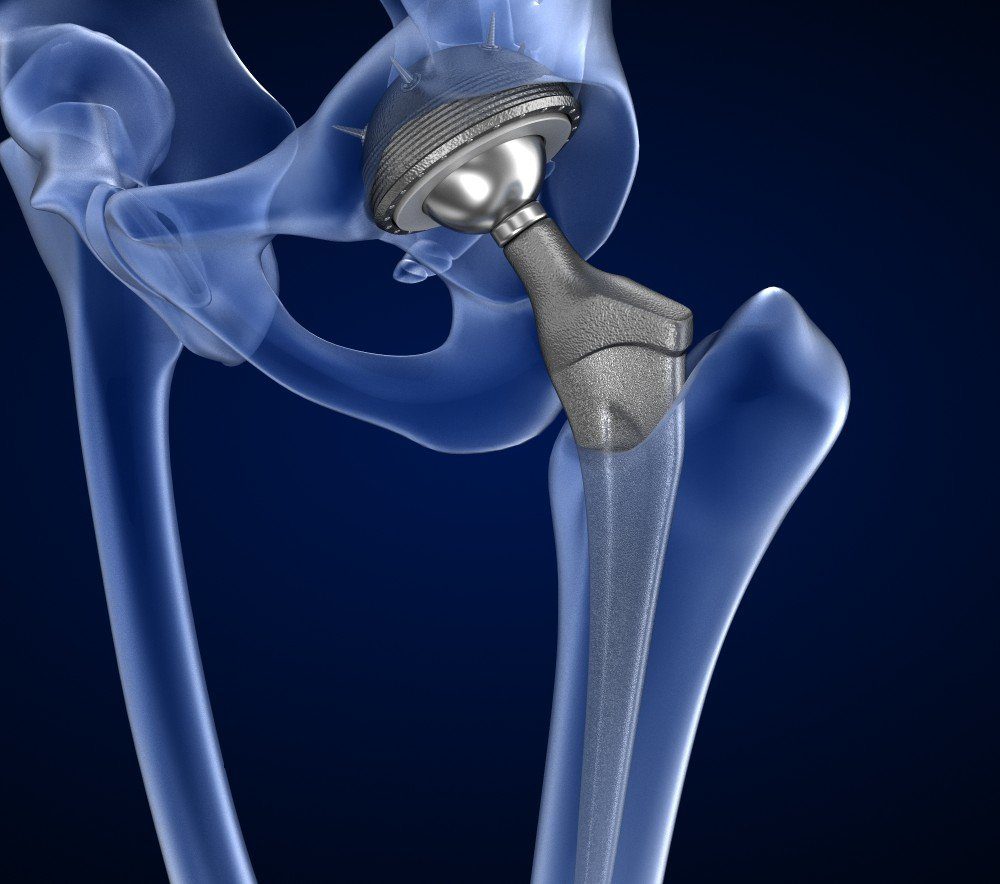
Components
Total hip replacement is composed of four components:
01 / The femoral stem
is a long metal part that is placed in the femoral canal. it is usually made of metal alloy such as titanium alloy. The stem is kept in place either by the bone or with bone cement. This will be decided by your surgeon depending on your age , bone quality and the shape of the femur.
02 / The femoral head
is a ball that is attached to the femoral stem and replaces the femoral head. It can be made of either metal (cobalt-chromium) or ceramic metal.
03 / The acetabulum
is a metal cup that is usually made of titanium alloy and attached to the acetabulum in the pelvic.
04 / Acetabulum Insert
is placed into the cup and acts like a shock absorber. It is either made of plastic or ceramic. The advantages and disadvantages of each prothesis will be discussed with you in details during your consultation.
What is hip osteoarthritis?
Hip osteoarthritis is a degenerative disease typically caused by wear and tear. It is caused by gradual cartilage destruction leading to bone rubbing on bone. These changes lead to pain, stiffness, muscle weakness and decrease hip range of motion
The Surgery
Total hip arthroplasty involves replacing the ball and socket of the joint. There are three commonly used techniques to approach the hip joint:
Front
Anterior approach to hip replacement
Side
Lateral approach to hip replacement
Back
Posterior approach to hip replacement
Minimally invasive hip replacement aims to minimize the impact on healthy muscles and blood vessels. Although the posterior approach was initially promoted as minimally invasive, today orthopedic surgeons can employ minimally invasive methods with all hip surgical techniques. Dr. Mina Morcos will discuss the most suitable approach based on individual factors.
Pathology and Expertise
Internationally recognized for excellence in orthopedics
Our practice provides an extensive array of comprehensive orthopedic care services.















Scroll
Pathology and Expertise
Orthopedic surgeons specializing in the knee and hip in Montreal
On this site you will find a range of information on osteoarticular and ligament pathologies frequently encountered in the lower limbs as well as possible treatments.
Send a message
Our array of joint replacement solutions
Minimally invasive surgeries and outpatient procedures.
If you wish to be advised on the most appropriate treatment, please call to schedule an appointment or click below to request an appointment online.
FAQ
Dr. Mina Morcos may recommend hip replacement for individuals experiencing pain, inflammation, and severe hip joint damage due to conditions such as:
- Osteoarthritis (most common)
- Rheumatoid polyarthritis
- Osteonecrosis (avascular necrosis)
- Previous hip injuries
Lauded by the Lancet as the "operation of the century," hip replacement stands out as one of the most successful procedures in the field of medicine.
Once you are not able to do your normal daily activities secondary to pain and stiffness and all non-surgical treatments have failed, total hip replacement might be the best option for you. Total hip replacement help relieving pain, decrease stiffness and restoring mobility therefore improving patient’s quality of life.
The primary advantages include:
- Effective Pain Relief: Hip replacement surgery is renowned for providing substantial and reliable relief from pain associated with various hip conditions.
- Durability: Modern hip replacements exhibit remarkable durability, with current bearing surfaces demonstrating high resistance to wear. The likelihood of a hip replacement failing before the 10-year mark is minimal, standing at less than 5%.
- Longevity: In the contemporary landscape of medical advancements, a significant majority of hip replacements endure well beyond 25 years, benefiting over 80% of patients. This extended longevity contributes to improved quality of life for individuals who have undergone the procedure.
These combined factors make hip replacement a highly successful and enduring solution for those seeking relief from hip-related discomfort and limitations.
When hip pain significantly impacts your quality of life, it may be indicative of the need for a hip replacement. Signs of diminished quality of life include:
- Difficulty performing daily tasks (walking, getting dressed, putting on shoes, climbing stairs, standing up, etc.)
- Inability to fully participate in enjoyable activities
- Poor sleep quality due to pain
Initially, Dr. Mina Morcos may suggest alternative treatments such as pain-relief medication, walking aids, intraarticular injections, and physical therapy. If these measures fail to alleviate pain and stiffness, hip arthroplasty may be recommended to restore function and enhance quality of life.
The most suitable type of joint replacement depends on several factors, including bone anatomy, activity levels, age, and bone quality.
You should expect to be able to return to your normal activities with less pain and limitation. You will be allowed to do any of the activities you like, however we recommend to avoid high-impact exercises such as running and jumping as they may cause your hip to wear out early.
Pain:
- You should expect to have some pain, swelling and bruising after surgery. Different medications and strategies will be provided to you to help managing your pain.
- Over time pain will improve and you will need les medications.
- Other strategies include; applying ice packs to your hip and elevate your leg several times each day
Swelling:
- Your leg will get swollen and bruised following surgery and will get worst in the first few weeks before it resolves.
- To help with the swelling you can ice your hip for 10-15 minutes at a time then wait 1 or 2 hours before you ice your hip again. Always wrap ice in a towel before putting it on your skin.
- You can also purchase ice machines such as cryocuff or game ready device but it is not necessary
- Also make sure to keep the leg elevated when you sitting or lying down.
Effective pre-surgery preparation reduces the risk of complications and accelerates recovery. Useful tips include:
- Engaging in a pre-surgery exercise program ("pre-hab") guided by a physiotherapist -- Stay active; keep active and exercise up to the day before surgery. This improves your strength, range of motion and endurance.
- Smoking cessation -- If you are smoker; you have a higher risk of getting an infection and wound complications. Therefore, we recommend that you quit smoking at least few weeks before surgery to optimise your outcomes.
- Weight loss -- If you are overweight; again you have higher risk of getting an infection or having other problems after surgery. Therefore, we recommend that you try to lose as much weight as you can before surgery. This can be achieved by talking to your family doctor or a dietitian.
- Close monitoring of blood glucose levels in diabetic patients -- If you are diabetic; managing your blood glucose is extremely important before surgery. It reduces the risk of problems after surgery such as infection. Make sure you talk with your family doctor or endocrinologist to make sure your blood glucose is optimised before surgery
- Medications; make sure you follow the recommendation given to you by our medical team concerning your medications before and after surgery.
- Maintaining a well-balanced diet and reducing alcohol consumption
- Home; make sure your home is ready for you when you return from your surgery. Some suggestions include (if needed): raised toilet seat, shower chair or bath transfer bench, handrails, chair with high/ firm seat with backrest and armrest, move any obstacles that you could trip over such as rugs, extension cords, etc.. Make sure you have someone to help you when you get home with daily needs.
Most patients are encouraged to walk with assistance within 2-4 hours post-surgery. Extensive physiotherapy instructions are provided before discharge, enabling patients to climb stairs and enter and exit a car. The typical postoperative stay is 1-2 nights. Crutches are recommended for the initial week, with some individuals continuing to use a single crutch or cane for a few additional weeks. Depending on occupation, patients may require 2-8 weeks off work. Driving as a passenger is permissible immediately upon discharge, and driving a car independently can typically resume ten days to two weeks after the procedure, provided narcotics are no longer taken. Airplane travel of less than 6 hours can be undertaken immediately after discharge.
Continue all usual medications, except for blood-thinning agents or those increasing the risk of blood clot formation. Special consideration should be given to certain anticoagulants, fish oil/Omega 3 (stop 3 weeks prior), supplements like Ginko, Ginsing, Garlic (stop 3 weeks prior), hormone replacement therapy (stop 3 weeks prior), oral contraceptive pills (stop 3 weeks prior), and immune-modulating medications (discuss during the visit).
While hip replacement surgery is generally safe, serious complications are rare. Serious wound infection occurs in less than 1% of cases, dislocation in less than 1%, and deep venous thrombosis (clots in leg veins) is rare. Dr. Mina Morcos discusses these risks in detail before the operation.
Total hip replacement surgery have been shown to be extremely durable and have 90-95% success rate at 10-20 year.
After recovery, there are minimal restrictions following hip joint replacement surgery. Impact activities like running are restricted for 3 months, while walking, cycling, skiing, hockey, and tennis can be resumed without limitation. Light jogging (up to 5 KM) is generally allowed, but excessive running is usually discouraged. Specific activity recommendations can be discussed during a visit.
Your hip will continue to recover for the next few months. In order to have a successful recovery you need to continue doing the following :
Keep your incision clean and dry
- You can shower after 48 hours from surgery
- You can have a bath after 6 weeks from surgery
- Do not rub anything on the incision including lotions and ointments
Stay active and do your exercises several times each day. Call your surgeon right away if you have any of the following concerns:
- The incision is red or draining a lot of fluid
- The incision smells bad or see green pus
- Have a fever that last more than 1 day
- Your pain is getting worst and the pain medications are not helping
Go to the emergency department if:
- Short of breath or have difficulty breathing
- Pain, tightness or pressure in your chest
- Sudden swelling, pain or redness in your thigh or calf
Dr. Mina Morcos recommends a lifetime surveillance plan for hip joint replacement, involving intermittent X-ray evaluations and clinical reviews. Standard surveillance typically includes clinical assessments at one year and every 2-3 years thereafter.
You can stop using them once you feel that you are strong and steady enough to stand on your operative leg without an assistive device.
When can I stop using my walker or crutches?
You should not drive for at least 6 weeks. Also do not drive if you are taking any medicament as they might affect your driving
When can I start to drive again?
Most people return to their usual activities by 3 months.
When can I go back to sport?
Most people go back to work by 6-8 weeks.
When can I go back to work?
It is very likely that this will happen. Just let the security staff know that you had a knee replacement before walking through the detectors. You do not need a special documentation to travel.
Will my new hip set off metal detectors in the airport?
Most patients do not need any restrictions or precautions after surgery.
Is there any knee precautions after my surgery?
Walking, dancing, swimming and golf are considered to be generally safe activities after your initial recovery period. High-impact or injury-prone contact sports are usually not recommended such as running
Are there any activity restrictions with my new joint?
All prostheses have a limited life expectancy depending on the individual patient’s age, weight and activity level. There are no guarantees on how long your new joint will last, although the average can be from 15 to 20 years.