Carpal Tunnel Release Surgery in Montreal
- Dr. Mina W. Morcos, MD, MSc, FRCSC
- Orthopedic Surgeon
- Westmount, Montreal
Montreal Private Hip & Knee Surgery Center Welcomes Patients From
Private Orthopedic Care in Montreal
Treatment for Carpal Tunnel Syndrome
Carpal tunnel syndrome is one of the most common nerve compression conditions of the hand, and it affects an estimated 1 to 5 percent of the general population. When numbness, tingling and night-time symptoms stop responding to splinting and activity changes, carpal tunnel release surgery can relieve the pressure on the median nerve. Dr. Mina W. Morcos offers assessment and surgical treatment at the Hip and Knee Surgical Clinic in Westmount, Montreal, for patients from across Quebec and Canada.
Have questions or want to schedule a consultation about carpal tunnel release?
Request a call-back consultation with Dr. Mina Morcos
Carpal Tunnel Release in Montreal
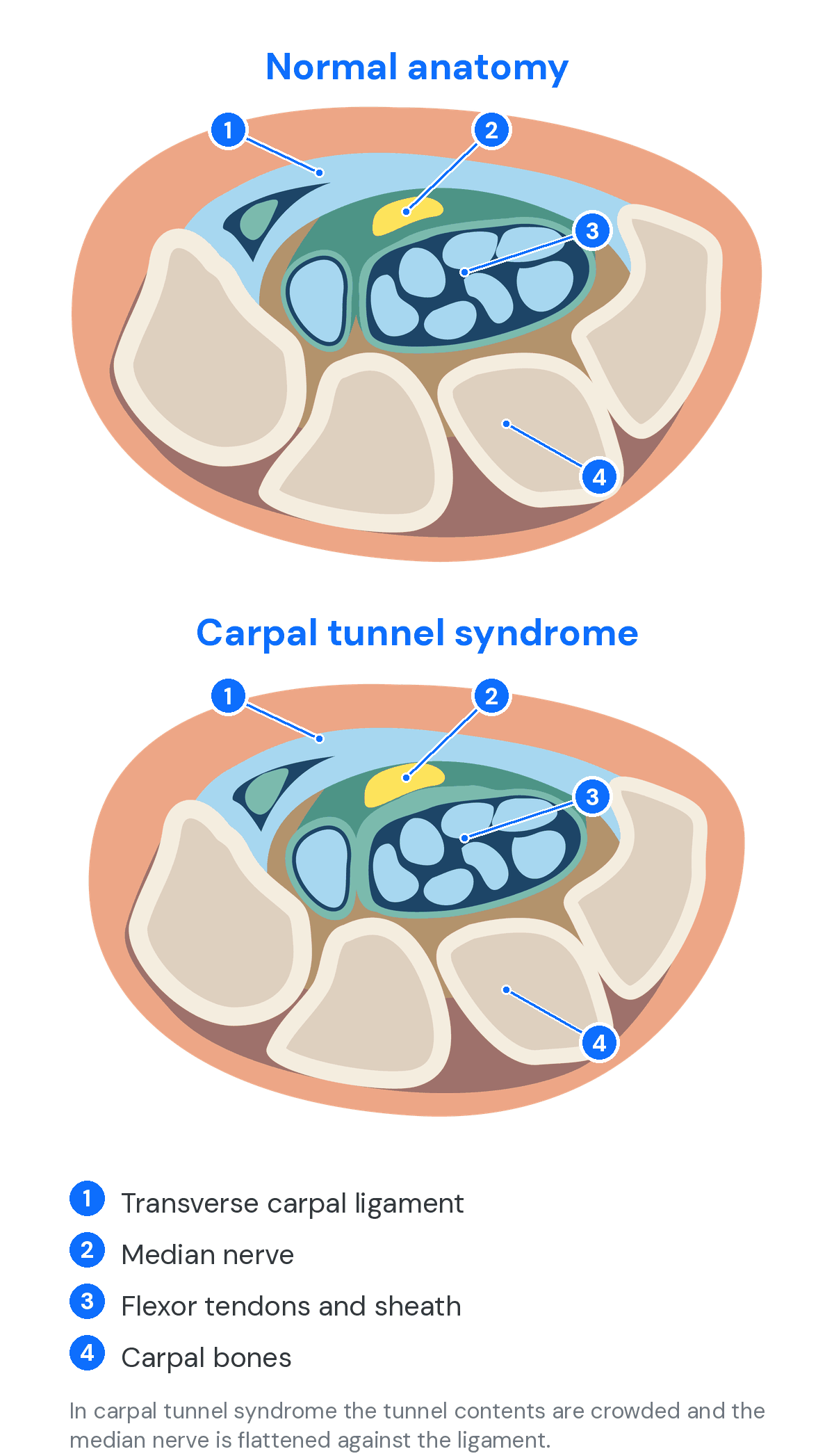
Carpal tunnel release is a day procedure that relieves pressure on the median nerve by dividing the transverse carpal ligament, the band of tissue that forms the roof of the carpal tunnel. Dividing that ligament enlarges the tunnel and takes the pressure off the nerve. The procedure can be performed through a small open incision in the palm or endoscopically, and it is usually carried out under local anaesthetic so that you go home the same day.
Understanding Carpal Tunnel Syndrome
What is the Carpal Tunnel?
The carpal tunnel is a narrow passage on the palm side of your wrist. Its floor and walls are formed by the small carpal bones, and its roof is formed by a tough band of tissue called the transverse carpal ligament. Running through this tunnel are the nine tendons that bend your fingers and thumb, along with the median nerve. The median nerve carries sensation from the thumb, index finger, middle finger and the thumb side of the ring finger, and it supplies some of the muscles at the base of the thumb. Because the tunnel is a confined space that cannot expand, any swelling or thickening inside it raises the pressure on the median nerve. That pressure is what produces the symptoms of carpal tunnel syndrome.
Common Causes and Risk Factors
Carpal tunnel syndrome often has no single identifiable cause. Several factors are known to increase the risk:
- Sex and age: the condition is considerably more common in women than in men, and incidence rises through middle age
- Medical conditions: diabetes, thyroid disease, rheumatoid arthritis and other inflammatory conditions
- Pregnancy: fluid retention can raise pressure inside the tunnel, and symptoms often settle after delivery
- Wrist anatomy and previous injury: a naturally smaller tunnel, or a previous wrist fracture or dislocation
- Sustained or repetitive hand use: particularly work involving forceful gripping, vibration or prolonged wrist positioning
Recognising Carpal Tunnel Symptoms
Symptoms usually begin gradually and follow the territory of the median nerve. Recognising them early gives more treatment options.
Early Symptoms
- Numbness, tingling or burning in the thumb, index finger, middle finger and the thumb side of the ring finger
- Symptoms that wake you at night, often relieved by shaking or hanging the hand
- Tingling brought on by driving, holding a phone or reading
- Symptoms that come and go rather than being constant
Progressive Symptoms
- Numbness that becomes constant rather than intermittent
- Weakness of grip, or dropping objects
- Difficulty with fine tasks such as buttons, keys or coins
- Wasting of the muscle at the base of the thumb in long standing cases
The little finger is typically spared, because it is supplied by a different nerve. That pattern is one of the features that helps distinguish carpal tunnel syndrome from other causes of hand numbness.
How is carpal tunnel syndrome diagnosed? Diagnosis begins with your history and a clinical examination of the hand and wrist, including tests that reproduce your symptoms. Nerve conduction studies and electromyography are often used to confirm the diagnosis and to grade how severely the nerve is affected. Ultrasound may also be used to assess the nerve. These findings, taken together with your symptoms, guide whether non-surgical treatment or surgery is the more appropriate next step.
Dr. Morcos Carpal Tunnel Treatment Approach in Montreal
At Hip & Knee Surgical Clinic, Dr. Morcos applies the Morcos 5-Step Recovery System™, combining careful diagnosis, non-surgical treatment where it is appropriate, precise surgical technique and an early return to hand function.
1 1
STEP 1
Comprehensive Diagnostic Assessment
Dr. Morcos examines the hand and wrist, tests sensation and grip strength, and reviews the pattern and timing of your symptoms. Where the diagnosis needs confirmation or the severity needs grading, nerve conduction studies and electromyography are arranged. This establishes whether the median nerve is compressed and how significantly.
2 2
STEP 2
Non-Surgical Treatment Where Appropriate
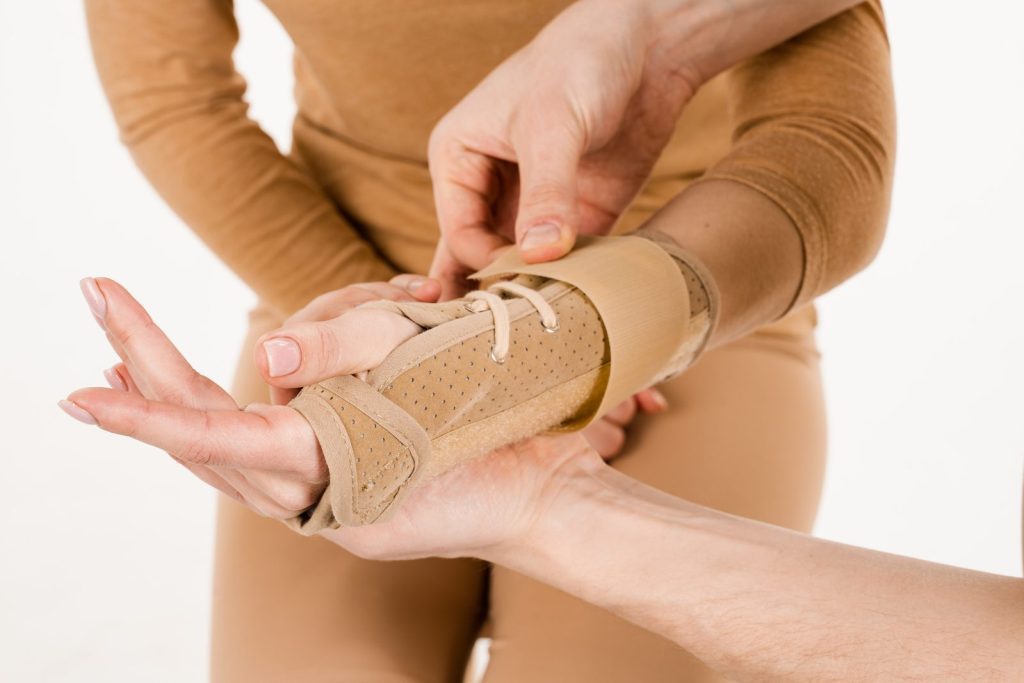
Mild and intermittent symptoms often respond to non-surgical measures. These can include a wrist splint worn at night to keep the wrist in a neutral position, changes to aggravating activities, treatment of any underlying medical condition, and a corticosteroid injection into the carpal tunnel. Dr. Morcos will discuss which of these is reasonable in your case and how long to trial them before reconsidering surgery.
3 3
STEP 3
Carpal Tunnel Release Surgery
When symptoms persist despite non-surgical treatment, or when nerve testing shows significant compression, surgery is considered. The operation divides the transverse carpal ligament to decompress the median nerve.
- Open carpal tunnel release: the ligament is divided through a short incision in the palm, giving direct visualisation of the nerve
- Endoscopic carpal tunnel release: the ligament is divided using a camera passed through one or two smaller incisions
Current AAOS clinical practice guidance reports no meaningful difference in patient reported outcomes between these approaches, so the choice is made with you based on your anatomy, your symptoms and Dr. Morcos’ assessment. The procedure is normally performed under local anaesthetic as a day case.
4 4
STEP 4
Early Movement and Recovery
You are encouraged to move the fingers early to prevent stiffness, and the hand is used for light activity as comfort allows. Night-time symptoms often settle quickly. Grip strength takes longer to return than sensation. Where there has been significant pain or weakness, Dr. Morcos may refer you for hand therapy, which is of most benefit to patients whose symptoms have been marked and long standing.
5 5
STEP 5
Long-term Hand Function
Recovery continues gradually, and complete recovery may take up to a year. Where the nerve has been compressed severely or for a long time, some numbness or weakness can persist, which is why earlier assessment matters. Dr. Morcos reviews your progress and advises on activity, workplace adjustments and protecting the other hand.
What we do
Who Needs Carpal Tunnel Release?
Surgery is generally considered when symptoms persist despite non-surgical treatment, when numbness has become constant, when there is weakness or muscle wasting at the base of the thumb, or when nerve testing shows significant compression. Because long standing compression can cause changes that do not fully reverse, persistent numbness is a reason to be assessed rather than to wait.
- Persistent numbness that has become constant rather than intermittent
- Night-time symptoms that repeatedly disturb sleep
- Weakness of grip or difficulty with fine tasks such as buttons and keys
- Wasting of the muscle at the base of the thumb
- Nerve testing showing significant compression of the median nerve


Our approach
Surgical Technique and Anaesthesia
Carpal tunnel release is a precise procedure performed through a small incision. Dr. Morcos discusses the technique, the anaesthetic and what to expect on the day before you consent to surgery.
What the Procedure Involves
Open or endoscopic release
comparable patient reported outcomes, chosen to suit your anatomy
Local anaesthetic
supported by current AAOS guidance, avoiding a general anaesthetic
Day procedure
you go home the same day, no overnight stay
Early finger movement
encouraged from the outset to limit stiffness
Why Choose Dr. Mina W. Morcos for Carpal Tunnel Release?
Dr. Mina W. Morcos is a fellowship trained orthopedic surgeon practising in Westmount, Montreal. Patients are assessed in person, given a clear explanation of what the nerve testing shows, and offered non-surgical treatment where it is reasonable before surgery is proposed.
- Assessment with a fellowship trained orthopedic surgeon
- Non-surgical options discussed before surgery
- Day surgery under local anaesthetic