Skip links

Joint Injections in Montreal

Montreal Private Hip & Knee Surgery Center Welcomes Patients From :

Private Orthopedic Care in Montreal

Injection Treatments for Joint Pain

Not every painful knee needs surgery, and not every patient is ready for joint replacement. Intra-articular injections sit between conservative care and surgery, and they can reduce pain and improve function for people who want to delay or avoid an operation. Dr. Mina W. Morcos offers assessment and injection treatment at the Hip and Knee Surgical Clinic in Westmount, Montreal, including corticosteroid, hyaluronic acid, platelet-rich plasma and Arthrosamid.

Have questions or want to schedule a consultation about joint injections?

Request a call-back consultation with Dr. Mina Morcos

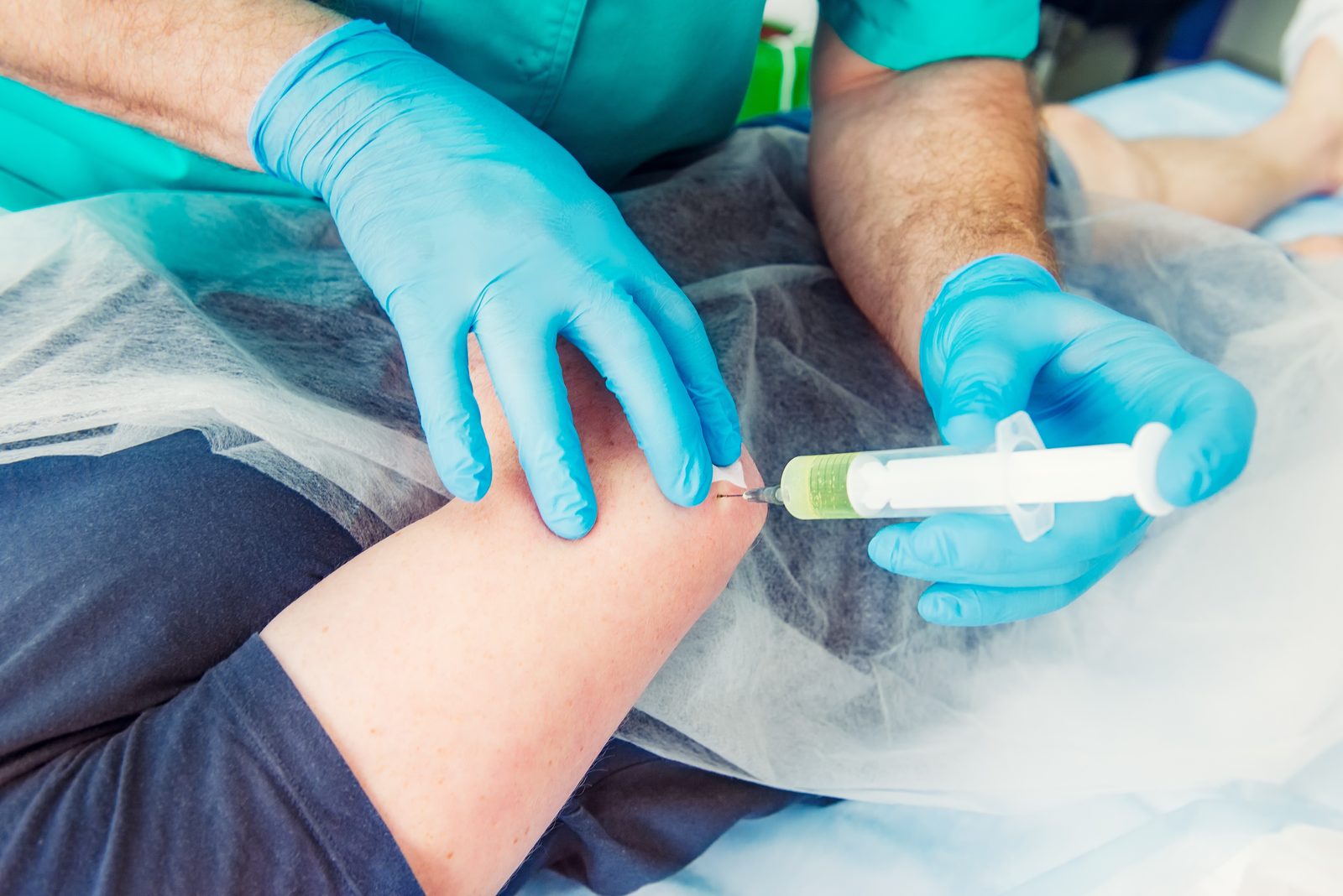
Clinician wearing sterile gloves administering an injection into a knee joint through a sterile drape

Injection Options for Knee Osteoarthritis

There is no single injection that suits every patient. The right option depends on the stage of your osteoarthritis, how your knee behaves day to day, what you have already tried, and what you are hoping to achieve. Dr. Morcos assesses the joint, reviews your imaging and explains what each option can and cannot reasonably be expected to do before anything is recommended.

Understanding Knee Osteoarthritis and Synovial Pain

Why the Joint Becomes Painful

In osteoarthritis, the cartilage that cushions the joint gradually wears away, and the surfaces that once glided smoothly begin to load unevenly. The synovium, the tissue lining the joint, becomes inflamed in response. That inflammation, known as synovitis, is a significant contributor to the pain and stiffness that patients actually feel, which is why treatments aimed at the joint lining can help even when the cartilage loss itself cannot be reversed. Injections work on this inflammatory and mechanical environment rather than regrowing cartilage.

Who Injections May Suit

Injection treatment is generally considered for patients who:

  • Have knee pain from osteoarthritis confirmed on examination and imaging
  • Have already tried measures such as activity modification, weight management, physiotherapy and oral pain relief
  • Are not ready for joint replacement, or wish to delay it
  • Are not currently suitable for surgery for medical reasons
  • Want to understand the options before committing to an operation

Injections do not repair cartilage and they do not stop osteoarthritis progressing. They are used to reduce pain and improve function.

Comparing the Four Injection Options

Cortisone, hyaluronic acid, PRP and Arthrosamid can all be used to manage arthritis symptoms, but they work differently, have different levels of evidence, and are not suitable for everyone. Typical patterns are shown below. Your response may be shorter, longer, or absent.

01

Cortisone injection

Corticosteroid is placed inside the joint to reduce inflammation. It is often the most practical choice for a painful inflammatory flare or when faster, short-term relief is needed.

Best fitShort-term symptom control
ProcedureUsually one injection

Considerations

  • Temporary pain flare may occur for 24 to 48 hours.
  • Blood glucose may rise temporarily, especially with diabetes.
  • Repeated injections should be planned carefully; frequency depends on the joint and the individual.
  • Timing matters if joint replacement may be needed soon.

02

Hyaluronic acid

Hyaluronic acid, also called viscosupplementation, is intended to improve the joint-fluid environment. It is used most commonly in the knee. Products may involve one injection or a short series.

Best fitSelected knee OA patients
ProcedureOne or several injections

Considerations

  • Relief is not immediate and not everyone responds.
  • Guidelines differ because the average benefit is modest when the highest-quality studies are considered.
  • Temporary swelling or a local inflammatory reaction can occur.
  • It does not rebuild damaged cartilage.

03

Platelet-rich plasma (PRP)

A small blood sample is processed to concentrate platelets, then injected into the joint. PRP is autologous, made from your own blood, but that does not make it risk-free or prove that it regenerates cartilage.

Best fitOften earlier-stage knee OA
ProcedureOne or a planned series

Considerations

  • Results vary because PRP systems, platelet concentrations and protocols are not standardized.
  • Post-injection soreness is common for a few days.
  • Some trials and reviews report benefit, while a high-quality placebo-controlled trial found no significant 12-month advantage.
  • Insurance coverage is variable.

04

Arthrosamid

Arthrosamid is a single 6 mL injection of a non-biodegradable polyacrylamide hydrogel intended for symptomatic knee osteoarthritis. It becomes integrated into the synovial lining and is not a medication or a biological treatment.

Best fitSelected knee OA patients
ProcedureOne permanent hydrogel injection

Considerations

  • It is for the knee, not a general injection for every joint.
  • Manufacturer instructions include prophylactic antibiotics and strict sterile technique.
  • A randomized trial found outcomes comparable to hyaluronic acid through one year; longer follow-up is encouraging, but the evidence base remains smaller than for established treatments.
  • Because the material is non-biodegradable, careful selection and informed consent are important.

Important: no injection can reliably regrow lost cartilage or cure osteoarthritis. The aim is symptom relief and improved function.

How is the right injection chosen? The decision depends on the severity and pattern of your osteoarthritis, your previous response to treatment, any other medical conditions, and your own goals. Dr. Morcos will set out what the evidence supports for each option in your particular situation, including where that evidence is limited.

Arthrosamid

Arthrosamid at Dr. Morcos' Montreal Clinic

Arthrosamid is a single injection treatment for knee osteoarthritis. It is licensed for sale in Canada by Health Canada as a Class III medical device, licence number 111097, first issued on 18 April 2024. It is a hydrogel of 2.5 percent cross-linked polyacrylamide and 97.5 percent water, and unlike the other injections on this page it is not absorbed by the body.

Assessment and Suitability

Dr. Morcos examines the knee, reviews your imaging and discusses what you have already tried. Arthrosamid is intended for knee osteoarthritis, so establishing that your pain is coming from osteoarthritis, and not from another source, matters before any injection is offered.

How Arthrosamid Works

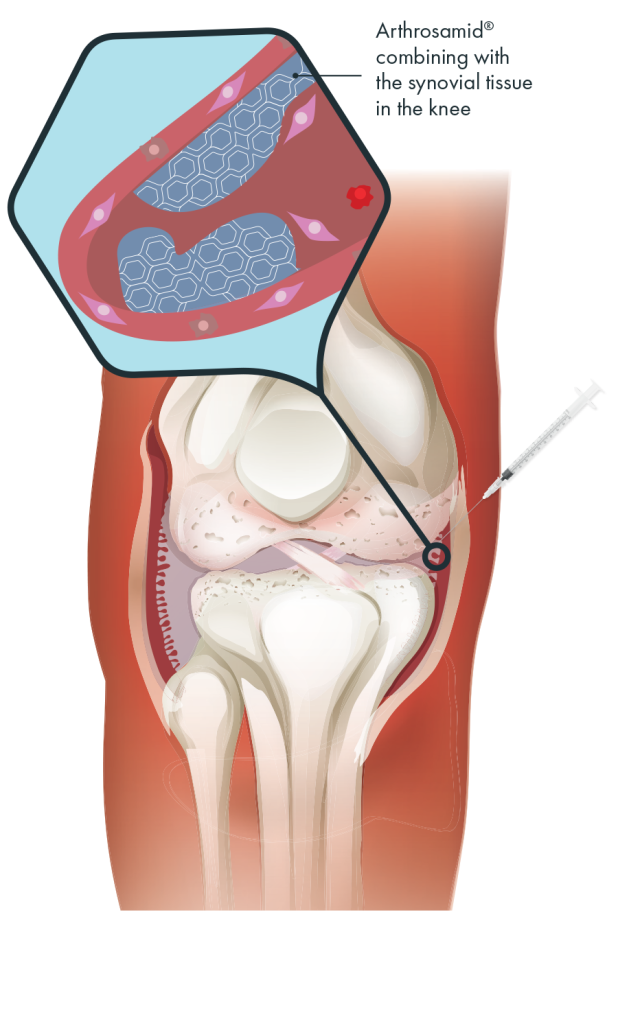
Once injected, the hydrogel disperses within the joint fluid and becomes positioned within the synovial tissue that lines the knee. It is understood to soften and increase the elasticity of that lining, which is where much of the pain of osteoarthritis originates. The manufacturer reports that integration takes place over roughly six to twelve weeks. Arthrosamid does not regrow cartilage and does not reverse osteoarthritis.

The Injection Itself

Arthrosamid is given as a single injection during a short clinic appointment.

  • Antibiotic cover is given beforehand to reduce the risk of joint infection
  • The skin is cleaned and local anaesthetic is used to numb the area
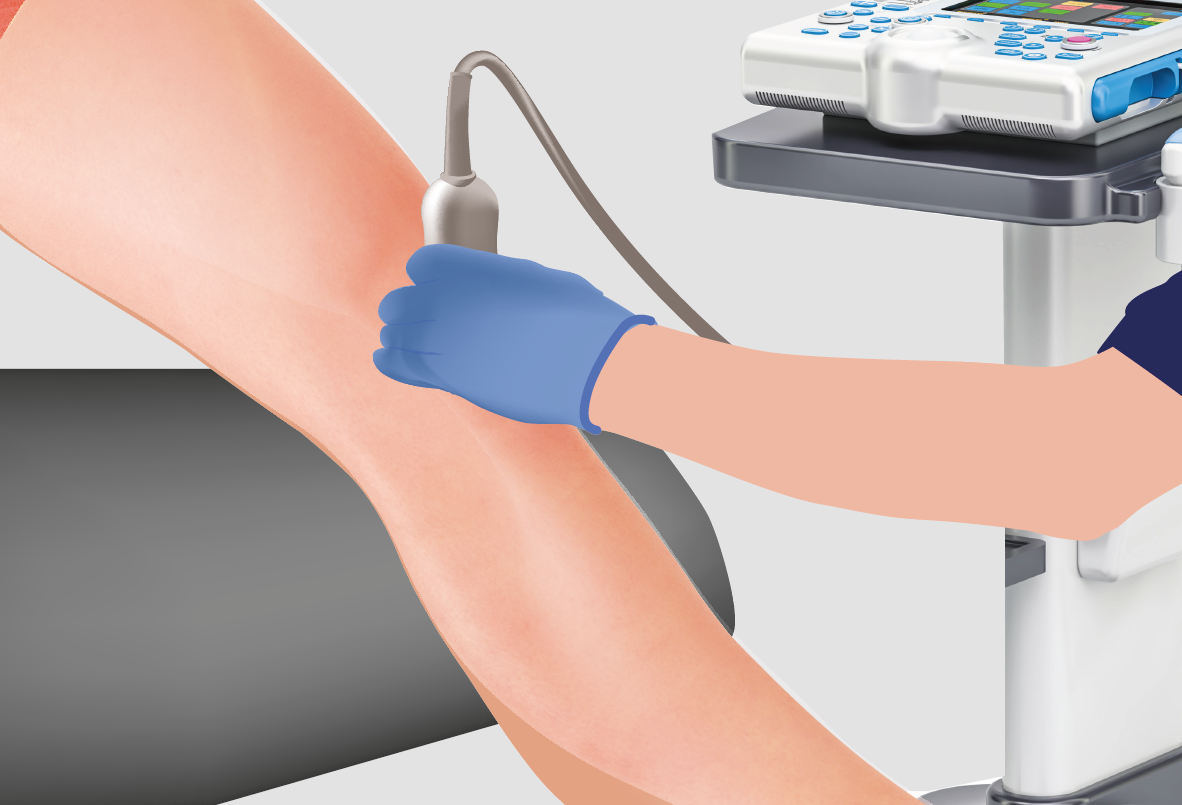
  • The hydrogel is injected into the joint space, in some cases with ultrasound guidance
  • A simple dressing is applied and you go home the same day

Because it is a single injection rather than a course, there is no series of repeat appointments to attend.

What the Research Shows

Two peer-reviewed studies matter most. In a randomised controlled trial of 239 adults, a single injection was compared against hyaluronic acid. Both groups improved, and the trial was designed to test whether the hydrogel was no worse than hyaluronic acid rather than whether it was better. It was not shown to be better. Separately, an open-label study of 49 patients, which had no comparison group, reported a 17.7 point improvement in WOMAC pain at 52 weeks. Published follow-up of the trial patients reported improvement sustained at five years, though only 58 of the original 119 remained in the study by then. Results vary between individuals and improvement is not guaranteed.

Safety and Follow-Up

Side effects reported in the studies were usually mild and short lived, most often temporary pain or swelling in the knee. In the randomised trial, more patients reported such effects after the hydrogel than after hyaluronic acid, 28.9 percent compared with 7.6 percent, though none were serious. Published studies have not reported harmful effects on cartilage to date. Because the hydrogel is designed to remain in the joint permanently, it cannot be removed, and Dr. Morcos will discuss what that means in your case.

Diagram showing how Arthrosamid hydrogel integrates with the synovial tissue of the knee joint

What we do

Is Arthrosamid Right for You?

Arthrosamid is licensed in Canada for the knee only. There is very little published evidence for its use in the hip, so it is not offered here as a hip treatment. For the knee, it is generally considered for adults whose osteoarthritis is not adequately controlled by exercise, weight management, physiotherapy or oral pain relief, and who are not proceeding to knee replacement. Active infection, certain other joint conditions and some medical circumstances can rule it out. Having this injection does not prevent a knee replacement later if one becomes necessary, and some patients in the studies did go on to have one.

  • Knee osteoarthritis  confirmed on examination and imaging
  • Inadequate relief  from exercise, weight management and analgesics
  • Not ready for  or not currently a candidate for knee replacement
  • No active infection  in the joint or elsewhere
  • A clear understanding  of what the evidence does and does not show
Arthrosamid single injection procedure for knee osteoarthritis performed under local anaesthetic
Clinician administering an intra-articular injection into a patient knee
Our approach

Assessment Before Any Injection

Every injection at the Hip and Knee Surgical Clinic follows an orthopedic assessment by Dr. Morcos. The aim is to be clear about what each treatment can reasonably achieve, and equally clear about where the evidence is limited.

Injection Treatments Offered

Corticosteroid injection

reduces joint inflammation, useful for short term relief of a flare

Hyaluronic acid

viscosupplementation aimed at improving joint lubrication

Platelet-rich plasma

prepared from your own blood, injected into the joint

Arthrosamid

single hydrogel injection, Health Canada device licence 111097, knee only

What Patients Often Want to Know

Will an injection regrow my cartilage?

No injection listed here has been proven to reliably restore substantial lost cartilage or reverse established osteoarthritis. PRP is sometimes marketed as "regenerative", but symptom improvement should not be presented as proof of cartilage regrowth.

Can an injection help me avoid surgery?

It may reduce symptoms and postpone surgery for some patients. It cannot correct severe joint deformity or restore a worn-out joint. Surgery is considered based on pain, disability, examination, imaging, health and preferences, not on X-rays alone.

Are injections painful?

Most patients experience brief pressure or discomfort. Local anesthetic and image guidance may be used depending on the joint and treatment. Temporary soreness or swelling can occur afterward.

How soon can I exercise afterward?

Instructions vary by injection and joint. Light daily activity is commonly allowed, while strenuous activity may be limited for a short period. Follow the individualized instructions given after your procedure.

Does ultrasound guidance matter?

Guidance can improve placement accuracy, particularly for deeper joints such as the hip and in difficult anatomy. Whether it is necessary depends on the joint, patient and clinician.

Are these treatments covered?

Coverage varies by treatment and insurance plan. Medication, product, facility and professional fees may be treated differently. Ask for a written estimate and verify reimbursement directly with your insurer.

Why Choose Dr. Mina W. Morcos for Joint Injections?

Dr. Mina W. Morcos is a fellowship trained orthopedic surgeon specialising in hip and knee conditions, practising in Westmount, Montreal. Because he also performs joint replacement, he can set an injection in the context of the whole treatment pathway, including when an injection is worth trying and when it is unlikely to help.

Dr. Mina W. Morcos, orthopedic surgeon, in the operating room in Montreal

Accessibility Statement

Accessibility Statement for https://hipkneesurgicalclinic.ca


Hip & Knee Surgical Clinic is committed to ensuring digital accessibility for people with disabilities. We are continually improving the user experience for everyone and applying the relevant accessibility standards.

Conformance status

The Web Content Accessibility Guidelines (WCAG) defines requirements for designers and developers to improve accessibility for people with disabilities. It defines three levels of conformance: Level A, Level AA, and Level AAA.

Hip & Knee Surgical Clinic is making constant efforts to improve the accessibility of its site and services in the belief that it is our collective moral obligation to allow seamless, accessible, and unhindered use for those of us with disabilities.

We aim to make all pages and content on https://hipkneesurgicalclinic.ca accessible, but some content may not yet fully meet the highest accessibility standards. This could be due to challenges in identifying the most suitable technological solution.

We may revise this Statement periodically to reflect improvements or changes to our accessibility practices.

Feedback

We welcome your feedback on the accessibility of Hip & Knee Surgical Clinic website. Please let us know if you encounter accessibility barriers on our website:

E-mail: info@hipkneesurgicalclinic.ca

We try to respond to feedback within 3 to 5 business days.

This statement was created on 10/04/2025.

Explore
Drag